Fire Door Signage Myths
Flat Entrance Doors Being Failed Due to a Lack of Fire Signage, Should This Be The Case?
Fire door inspections are essential for protecting lives and ensuring compliance—but what happens when inspections themselves are wrong?
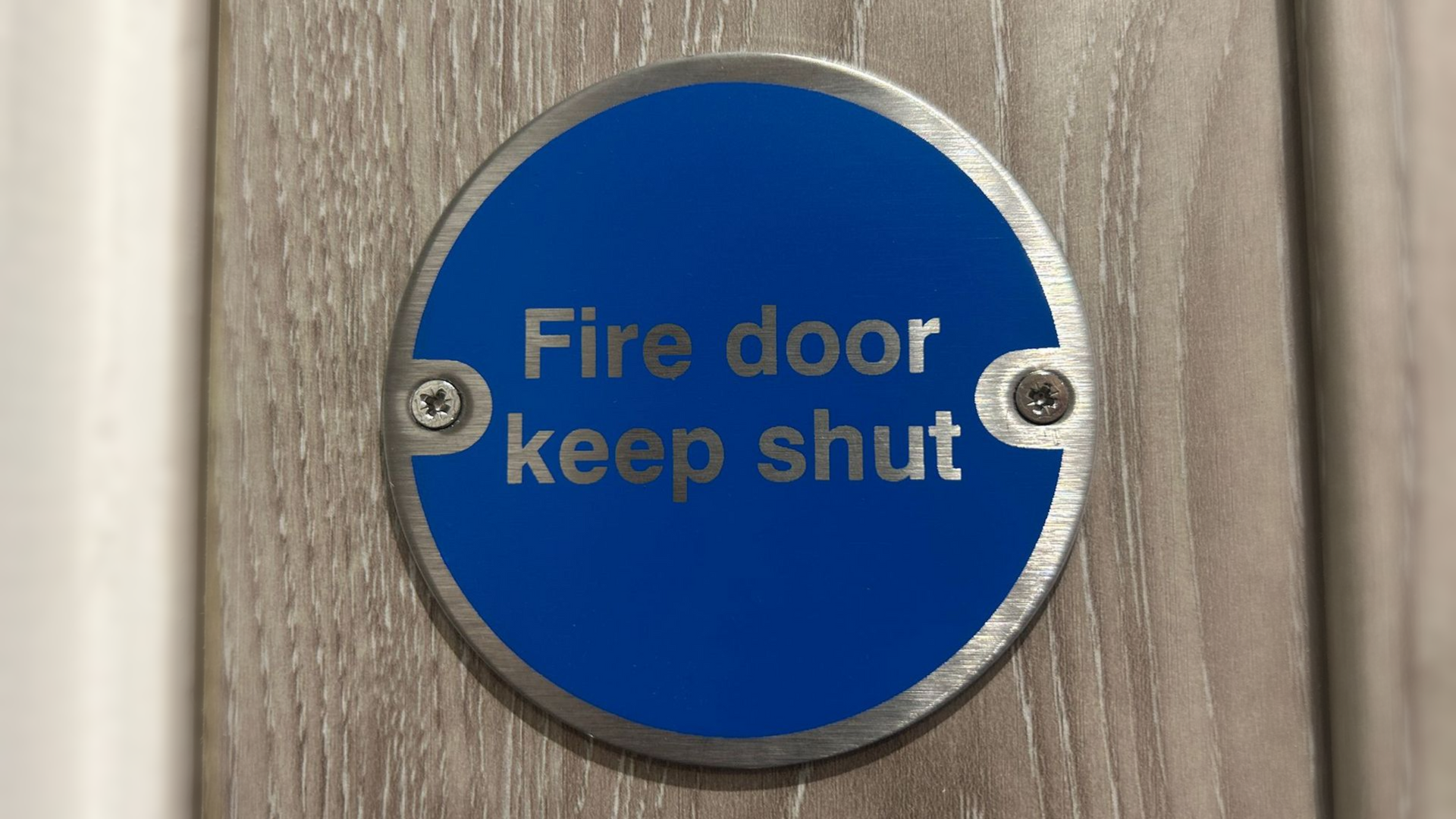
A growing issue across the industry is the incorrect failure of flat entrance doors due to missing fire door signage, typically “Fire Door Keep Shut”. At first glance, this might seem like a straightforward compliance issue. In reality, it often highlights a deeper problem: a lack of full understanding of fire safety guidance.
Where the Confusion Starts
Guidance within Approved Document B is frequently referenced during inspections. Appendix C, Paragraph C11, states that fire doorsets should carry signage in accordance with BS 5499-5, including:
- Fire door keep shut
- Fire door keep locked shut
- Automatic fire door keep clear
Taken in isolation, this appears to apply to all fire doors—and this is where many inspections go wrong.
The Critical Detail That Gets Missed
Buried within the same appendix is Paragraph C12—arguably one of the most overlooked yet crucial sections. It clearly states that:
- Doors to and within flats and dwellinghouses are exempt from the signage requirements in C11
In simple terms: Flat entrance doors do NOT require fire door signage.
Yet, time and time again, these doors are being failed for exactly that reason.
The Real Cost of Getting It Wrong
Misinterpreting guidance doesn’t just lead to minor admin errors—it can have real consequences:
- Unnecessary fail reports
- Costly and avoidable remedial works
- Confusion for responsible persons carrying out checks under Regulation 10
- Reduced confidence in fire safety compliance
More importantly, it can shift focus away from genuine life safety risks that legitimately require attention.
Why Competency Matters More Than Ever
Fire safety guidance is not just about reading a document—it’s about understanding how it applies in context. Approved Document B is extensive, and without the right level of training and experience, key details like C12 are easily overlooked.
This is why choosing a qualified and competent fire door inspector is critical.
Professionals operating under recognised schemes such as the BM TRADA Q-Mark Scheme are assessed not only on practical ability, but on their knowledge and interpretation of current legislation and standards. That level of competency ensures:
- Accurate, defensible inspection reports
- Compliance aligned with real regulatory intent
- No unnecessary costs or incorrect failures
Don’t Let Misinterpretation Cost You
If your flat entrance doors have been flagged for missing signage, it’s worth asking a simple question:
Is the assessment based on a full and correct understanding of the guidance?
At RWB, we specialise in fire door inspections that are accurate, compliant, and grounded in up-to-date legislation. We don’t just follow guidance—we understand it.
Whether you need reassurance, a second opinion, or a full inspection service, working with the right professionals can save you time, money, and unnecessary stress—while keeping safety the top priority.
Share Post
More News